Our affordable Adobe Lightroom Workshops are aimed at digital photographers who have struggled to get to grips with Adobe's catalog and editing program.
Make no mistake, the 2023 version of Lightroom is a game-changer. The addition of Artificial Intelligence based masking, the ability to have multiple masks, and the capability of those masks to intersect with each other are truly groundbreaking.
The recent addition of color grading, combined with AI-based masking, really does make Lightroom a viable alternative to Adobe's flagship Photoshop program for most of a photographer's editing needs.
Our one-day Lightroom Workshops will have you editing your images to a very high standard whatever your level of previous knowledge. You will be taken through every aspect of an efficient Lightroom workflow, from creating a catalog and importing images to exporting the finished image.
You can expect to leave the workshop with the ability to do all of the following in an efficient way:
Create a catalog for your project
Import Images
Add Copyright Information and Basic Settings on import
Finding interesting documentary photography topics can be a challenge. This article will help photographers to generate ideas and tell powerful stories.
Image "Gold" by Sebastião Salgado
In the first article in this series about documentary photography we discussed how photography can be a powerful medium for capturing and telling the stories of the world around us.
Whether you're a professional photographer or an amateur with a passion for storytelling, generating documentary photography topic ideas can be a challenge. If you have sat in front of your computer staring at a blank screen or faced the dreaded blank page, fear not, you are not alone.
In this blog post, we'll explore some of the key strategies and techniques for coming up with new and impactful project ideas. We will highlight broad ideas for you to research, hopefully we can make that research interesting, and who knows, you might even find it fun.
I will confess, I do find research fun. My university professor constantly reminded me that "you are a photographer, not a social scientist." He was wrong of course, Bachelors Degree was in social sciences. However, the point that was being made is that photography is a visual medium, so visual research is incredibly important.
Of course, there isn't much point in carrying out research if you don't already have some ideas. So, how do we find the inspiration for a project? Read on as we discuss ways to find interesting documentary photography topics.
Start by understanding your own community
You can find many great documentary photography ideas right there on your own doorstep. Don't underestimate the importance of understanding your community and the unique stories that it has to tell. It's easy to assume that local stories are of no interest to anyone outside the local area.
That just isn't true, but you do have to be creative to make it work. Take the time to get to know the people, places, and issues that are important to your community, and look for ways to use your photography to bring those stories to life.
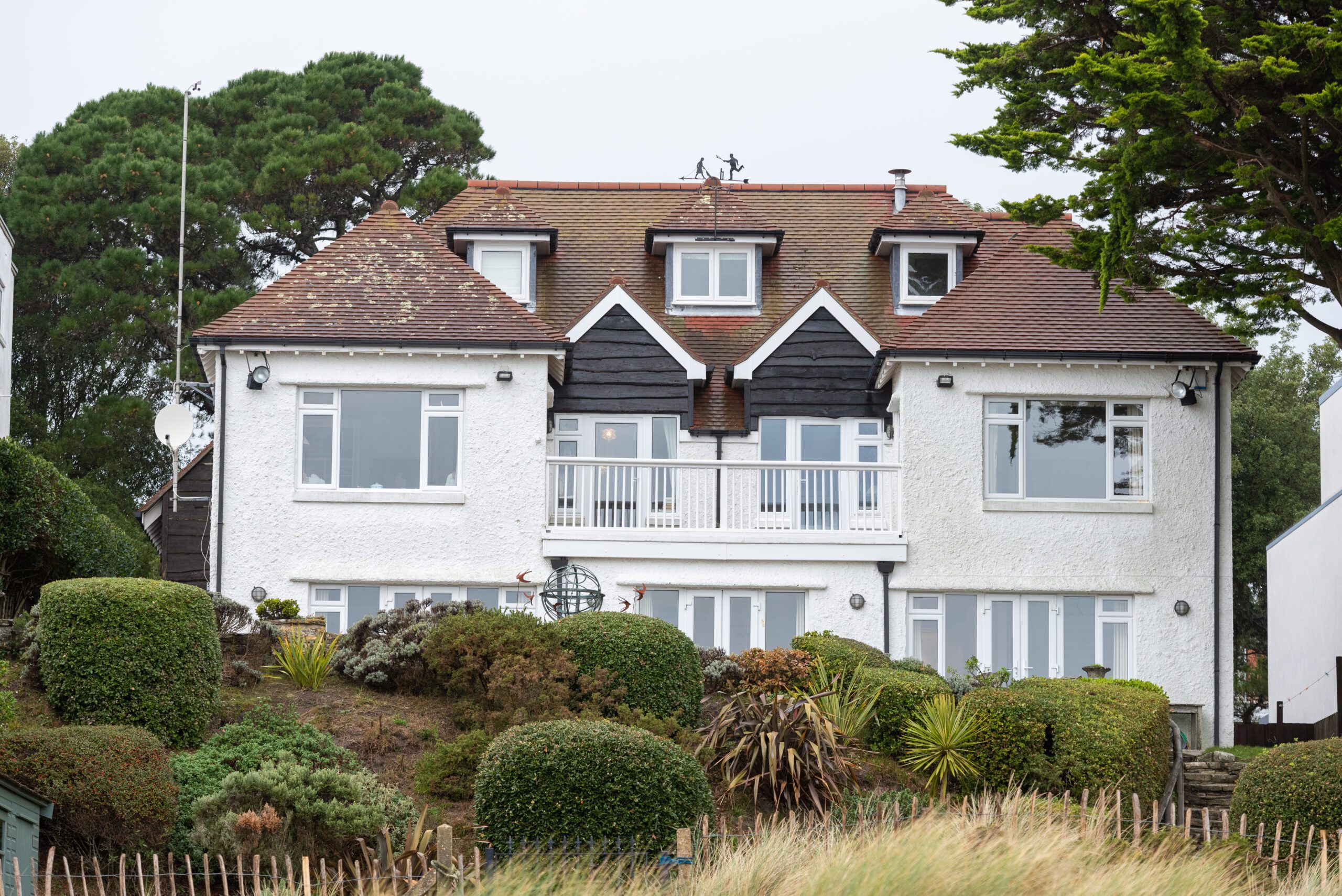
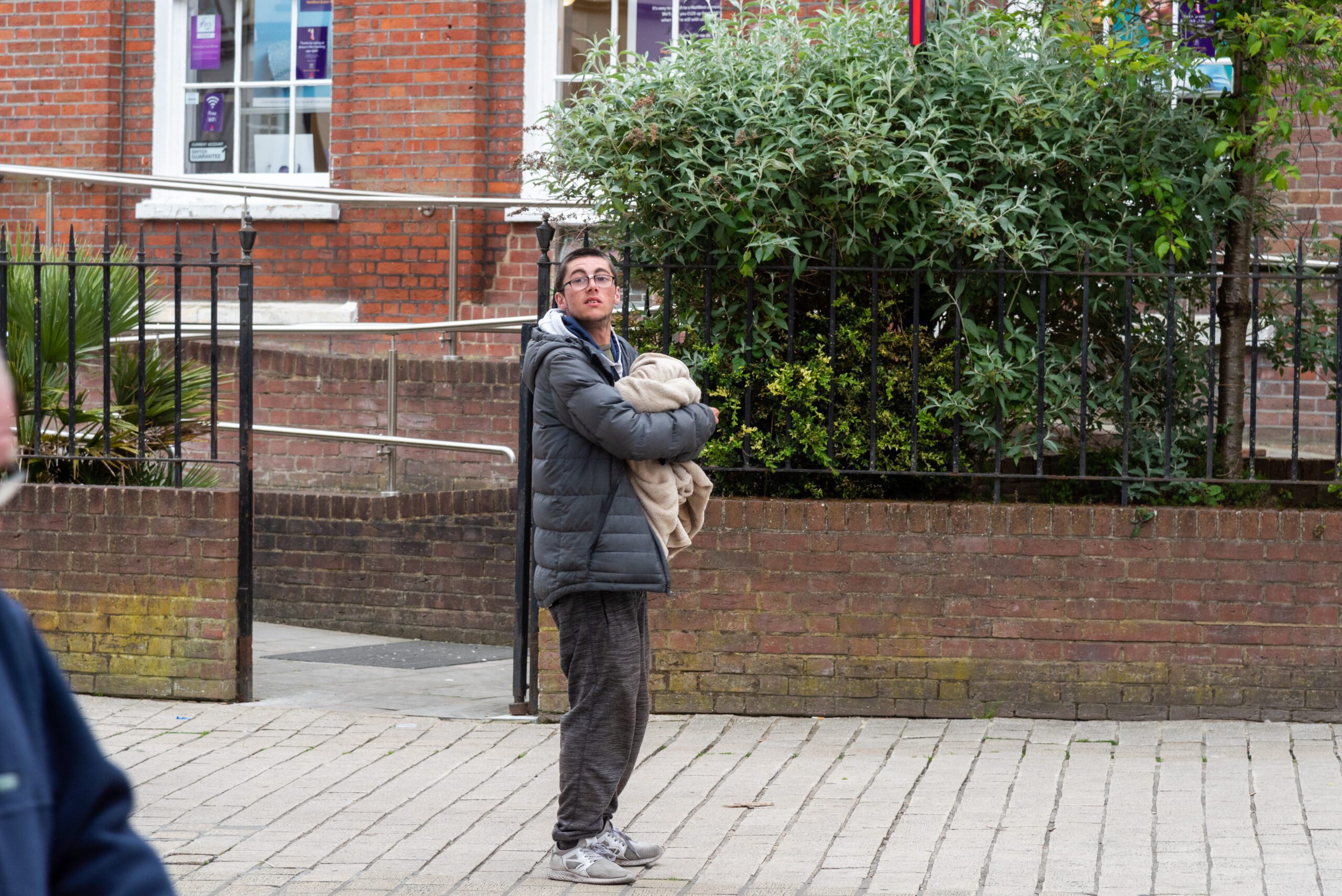
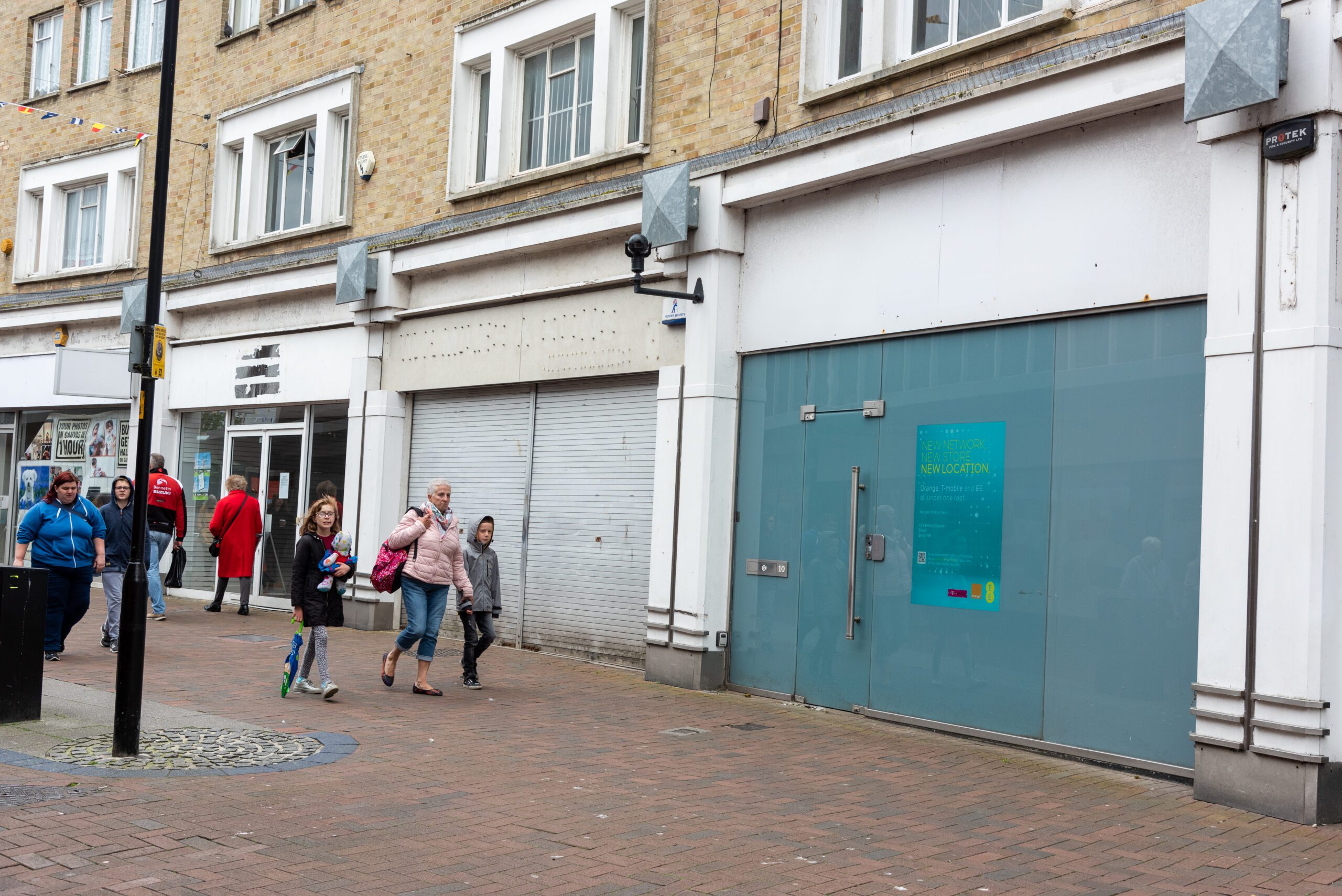
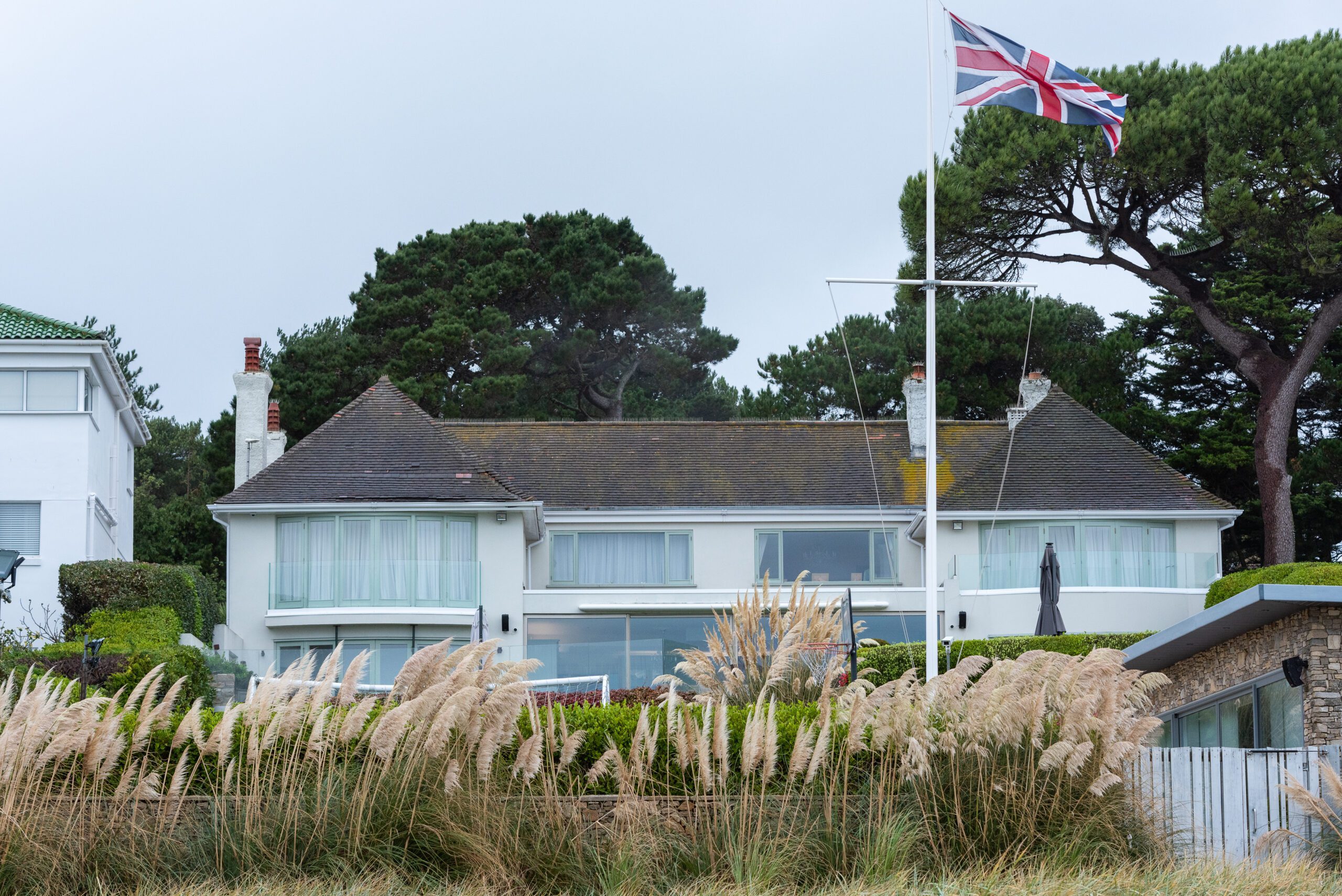
Think about how local issues are reflected in wider society. As an example, I used to live in Poole Dorset. Poole is home to Sandbanks, one of the most expensive places in the world to live. It is certainly a beautiful place, but just a few miles away, the town centre is a place of empty shops.
Things are so bad in Poole that McDonalds, Burger King, and Subway have abandoned the town centre. It's interesting to contrast homeless people living on the streets and empty shops with the extreme wealth a couple of miles down the road.
Read the local media, browse local Facebook groups, and use your eyes to identify topics that people are interested or concerned about. These things can be a rich source of documentary photography project ideas.
Previous
Next
Use Personal Experiences and Emotions to Inspire Documentary Photography Projects
Don't ignore your own personal experiences and emotions. You are quite literally a walking talking encyclopedia of possible documentary photography topics.
Think about events or experiences that have had a profound impact on your life, or a deep-seated emotion that you're trying to explore, using your own life as a source of inspiration can be a powerful way to create meaningful and impactful photography.
Of course, you will still need to research how others have experienced similar things, how they dealt with them, and how they feel about them. Explore how your experiences reflect lived experience in wider society and research how others have presented similar issues in a visual way. Will the story be best told using portrait, street photography, or even mixed media images?
The Role of Research and Planning in the Idea Generation Process
Research and planning are essential elements of the idea-generation process for any type of photography, but they are especially important when it comes to finding documentary photography topics that are worthy of exploration.
Take the time to research the subjects and issues that you're interested in exploring, and plan out your projects in detail before you begin shooting. This will help you to stay focused and on track, and ensure that your photography is as impactful as possible.
It's always worth exploring whether an experienced photographer has already completed a project on the documentary photography topics that you are interested in. The Magnum website is a great resource for this kind of visual research as many of the world's top documentary photographers are on that site.
You don't need to dismiss your topic idea because a famous photographer has already covered the topic. Use their work as inspiration and think about how you could add a unique angle or a more modern interpretation of the project.
Publications like the British Journal of Photography or National Geographic are great resources for helping to generate photography project ideas. They also keep you informed about trends in contemporary photography.
Approaching Sensitive or Controversial Documentary Photography Topics
Documentary photography often deals with sensitive or controversial subjects, and it's important to approach these types of projects with care and consideration. Whatever your approach to documentary photography topics, people will be involved at some point in the process.
Those people may be participants in your project or those who view your work when it is complete. Obviously those people have their own life experiences and those experiences may have been extremely traumatic for them.
Make sure that you have a clear understanding of the issues involved, and be prepared to handle any potential backlash or criticism that may come your way. It's also important to be respectful of the subjects of your photographs and to avoid exploiting them or their situations for your own gain.
You should always treat people with dignity and respect their views, even if you don't agree with them. If your project deals with subjects that are likely to trigger traumatic memories for participants it is a good idea to be in possession of information on where your participants can find help and support.
Make potential participants aware of the full details of your photo project and allow them to withdraw for any reason. Behaving in an ethical manner when you are photographing sensitive documentary photography topics is non-negotiable. We will discuss the ethics of documentary photography in the next article in the series.
Diversity and representation are important considerations in any type of photography, but they are especially crucial when it comes to a documentary project. Make sure that your projects reflect the diverse perspectives and experiences of the people and communities you are part of.
If you strive to be inclusive and representative in your work project ideas will present themselves as a natural part of the research process. This not only helps to ensure that your photography is more accurate and authentic, but it also helps to promote understanding and empathy among your audience.
The Role of Self-Reflection When Developing Documentary Topic Ideas
Self-reflection and introspection are important aspects of the idea-generation process for any type of photography, but they are especially crucial when it comes to documentary photography. Take the time to reflect on your own motivations and reasons for pursuing photography, and consider how your own experiences and emotions can inform your work.
When reading or viewing other people's work think about how you might present a topic in a different way. Consider how the topic makes you feel. Do the photos make you laugh, sad, or angry? Reflecting on those feelings can help you to decide your project approach and how the final images should look.
This reflective approach can help you to generate new and meaningful ideas for documentary photography projects. It's also important to reflect on your practice as the project develops. Are you on track with your plan? Do you need to change your approach? What have you learned as you work your way through the project?
Does new knowledge indicate that you should allow the project to move organically in a different direction? Has the experience you have gained as you navigate your project generated ideas for future projects?
I make comprehensive notes as I work through a project and always find that new project ideas present themselves as I do so. It's important to be mindful as you work as it can help you to come up with good ideas for future documentary projects.
Collaborate With Organisations or Other Artists
Do you have a colleague that you could collaborate with on a documentary project? What about a more experienced documentary photographer who could mentor you? Few things work better for generating project ideas than being able to bounce ideas off someone who shares your passion for photography.
Collaborating with organisations with an interest in the project niche can be a great way to generate new ideas for documentary photography projects. Working with a local NGO to document the work they do can help you to see things from a new perspective and bring new project ideas to the table. Collaborating in these ways might also help to open up potential opportunities for funding your project.
Current Events and Social Issues as Documentary Photography Topics
Current events and social issues are a constant source of inspiration for documentary photography projects. From political upheavals and natural disasters to social movements and cultural shifts, there are countless ways to use your photography to shed light on the issues and events that are shaping the world around us.
Be aware of what's happening in the world, and consider how your photography can contribute to the conversation. Watch news, current affairs, and cultural programs on television and identify the topics that are making headlines. Use social media to identify the topics that are trending locally, nationally, and internationally.
Perhaps most importantly, think about the issues that you are passionate about. If you are emotionally invested in a project you will be more excited by it and you will be willing to work harder to achieve the end results that you envisage when you begin.
Documentary photography projects can take months, or even years, to complete. You are less likely to become bored or demotivated if you are passionate about your topic.
Ted talks are a great resource for finding potential documentary photography topics.
https://youtu.be/yBFC-RtfTfg
20 Documentary Photography Topics You Could Develop
Street life and culture in major cities
The effects of gentrification on communities
Homelessness and poverty
Environmental conservation and activism
Migrant and refugee communities
Aging and elderly care
Mental health and well-being
Labor rights and worker conditions
The criminal justice system
Education and access to opportunities
Rural communities and agriculture
Urban renewal and redevelopment
Indigenous cultures and rights
Healthcare access and disparities
LGBTQ+ communities and rights
Women's rights and empowerment
Technology and its impact on society
The effects of climate change on communities
Religious communities and practices
Disabilities and accessibility issues
Conclusion
In conclusion, finding great documentary photography topics can be a challenging but rewarding process. Whether you're just starting out or you're a seasoned professional, the key is to be open to new ideas and to approach your work with a sense of curiosity and exploration.
Remember to understand your community, use personal experiences and emotions, research and plan, approach sensitive subjects with care and respect, collaborate, use technology creatively, use visual storytelling, promote diversity and representation, reflect on your work, and be aware of current events and social issues. With the right approach, you can create powerful, impactful, and meaningful documentary photography.
In our next article in the documentary photography series we will discuss the ethics of documentary photography and how to avoid potential pitfalls.
https://alanewart.co.uk/how-to-find-documentary-photography-topics/?feed_id=110&_unique_id=63e625711eab4
In this latest article, we discuss the ethics of documentary photography and why ethical considerations should be close to the top of your priority list when you are planning a documentary project.
As photographers, we have the right to express ourselves creatively, but in documentary photography projects it's also important to ensure that we do not invoke that right in a way that is detrimental to those we photograph. After all, as documentary photographers, we are dealing with real people, events, and situations and those events may have been extremely traumatic.
With its ability to shed light on important social and cultural issues, documentary photography has the potential to educate, inspire, and bring about change. However, it also has the ability to mislead and misrepresent. Therefore, we must always ensure that we apply the highest ethical standards to our work.
This discussion of the ethics of documentary photography will help you to ensure that you maintain a good balance between your artistic expression and your responsibility towards those who engage with our work as participants or viewers.
The principles are not difficult to understand, but there are sure to be some things that you have not considered when planning your project or generating documentary photography topic ideas.
In this blog post, we will explore some key subtopics on the ethics of documentary photography and discuss how photographers can navigate the complex ethical landscape that is part and parcel of this genre.
The ethical considerations that are discussed here are equally important for other photographic genres, especially for street photography and photojournalism.
The Role of Informed Consent in Documentary Photography
Informed consent is a critical component when considering the ethics of documentary photography. This means that photographers should make a good-faith effort to inform their subjects of the purpose and potential impact of their images and obtain their consent to use the images in a particular way.
In some cases, this may mean that photographers need to have difficult conversations with their subjects in order to ensure that everyone is on the same page. When I begin a project I prepare a form which explains the project in detail. It explains exactly how the images will be used, typically this will include website, social media, print media, exhibition, competition, or even a book.
I also explain that the participant can withdraw from the project at any stage. I will send copies of the images I have captured and ask the participants to confirm that they are happy for me to use them in any of the ways outlined in the informed consent document.
If the subject hates the photos, or if they have simply changed their mind, it is much better to know before an article, or in a worst case scenario, a book goes to print.
The Impact of Technology on the Ethics of Documentary Photography
I think it would be fair to say that the rapid advancement of technology has had a profound impact on the world of documentary photography. We now have cameras that can embed location and GPS data into the Exif files of our photographs.
This technology is useful in helping photographers to catalog their image libraries, but if we are careless it can identify a vulnerable person's home address to unscrupulous people who have no right to that sort of data.
Likewise, programs like Adobe Lightroom offer us the opportunity to use facial recognition to identify individuals in our image collections. While this technology is useful to us as photographers as it can be used to identify subjects and improve the accuracy of images, it also raises serious privacy and ethical concerns.
We can never be certain how much data is scraped by technology companies when we use their software. Therefore, photographers must carefully consider the potential impact of this technology on their subjects and make informed decisions about whether and how to use it.
Photographic Manipulation's Impact on the Ethics of Documentary Photography
We have all heard the expression that "the camera never lies." Unfortunately, in the modern world, this simply isn't the case. Technology has made the manipulation of images easier than ever. The rapid advancement of Artificial Intelligence based software means that even those with limited technical skills can now manipulate images with the click of a button, or in many cases, with the swipe of a finger on a screen.
While some argue that the use of digital tools and techniques is necessary to create a compelling visual story, others argue that manipulation undermines the credibility of the images and the photographer's role as a witness to events.
Just last month a scandal erupted when British Government minister Grant Shapps shared an image on Twitter. Unfortunately for Shapps eagle eyed viewers spotted that former Prime Minister Boris Johnson had been removed from the image. Shapps claimed that he had failed to notice that Johnson was missing from the image he tweeted. This might seem a minor matter but it damages the integrity of photography, and in this case photojournalism.
If the ethics of documentary photography are to be maintained, it is essential that photographers are transparent about their methods and clearly communicate any manipulation that has taken place.
Privacy Concerns in Documentary Photography
It can be difficult to balance the ethics of documentary photography with the need to tell a story in an impactful and engaging way. In order to tell a compelling story it is often essential to capture sensitive or intimate moments. This often means being invited into a subject's personal space and we may be exposed to aspects of a subject's life story that they would prefer to keep private.
In these situations, it is essential that photographers carefully consider the potential impact of their images on the subjects and make an informed decision about whether to proceed. We must ensure that the images we make do not encroach into areas that have not been agreed upon in advance.
It may sound obvious, but if you have any doubts ask the subject if it is OK to proceed and ask if it is OK to use the image.
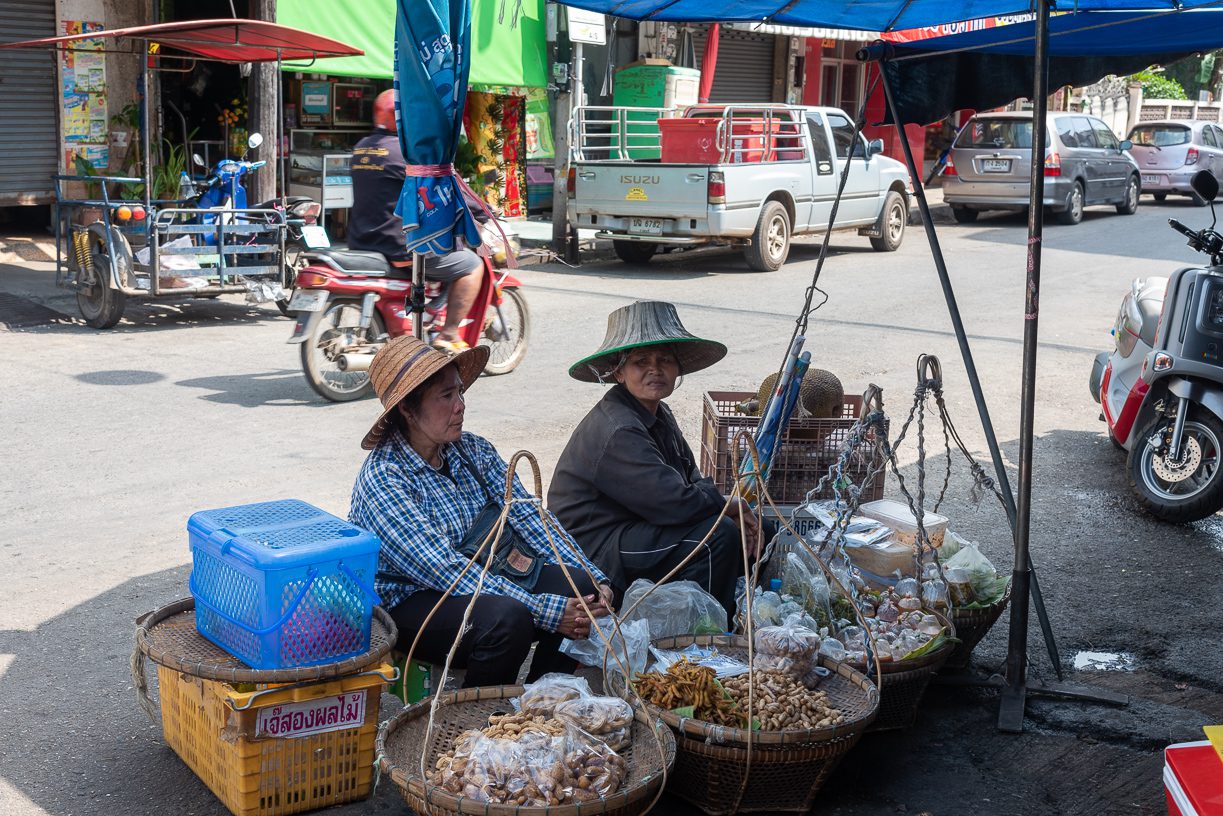
Some of the images used in this article are from a project I undertook in Thailand a couple of years ago. The project was a sort of hybrid between street and documentary photography and focused on refugees who had fled to Thailand from the conflict in Myanmar. Some of the refugees had entered Thailand illegally. Others had been brought in by people traffickers and were forced to work in Thailand's fishing industry.
For obvious reasons some people really did not want to be photographed. When this was made clear I simply deleted the images and allowed those people to see that I had done so.
The Ethics of Photographing Vulnerable Communities and Individuals
Continuing on from the section above, we can see that documentary photographers often find themselves in situations where they are documenting communities or individuals who are vulnerable, such as refugees, people experiencing homelessness, or those living in poverty.
These situations require a high level of sensitivity and ethical consideration, as the images can have a significant impact on the lives of the subjects.
With a little thought, it is a simple matter to photograph vulnerable people in a sensitive way, preserving their dignity, and if necessary, without identifying them.
Ethical documentary photographers must be mindful of their own biases and perspectives, and they must make a conscious effort to accurately represent the experiences of their subjects without exploiting them.
The ethics of documentary photography demand that photographers accurately represent their subjects.
This means that photographers must make a conscious effort to avoid stereotypes and to accurately depict the experiences and perspectives of their subjects.
Photographers must also be mindful of the power dynamics that might exist between themselves and their subjects, and they must make an effort to create a level playing field in which their subjects are given an equal voice in the storytelling process.
https://youtu.be/Y8JdmlJQASs
Representing diverse perspectives is a critical component of ethical documentary photography. Photographers must make a conscious effort to capture a range of perspectives, including those of marginalised communities, and to avoid perpetuating stereotypes or misrepresenting their subjects.
If we accept that documentary photography has the power to produce the sort of images that don’t just capture and preserve the world around us, but can help to shape it, then photographers need to go beyond their comfort zones. There is a wealth of material to be found if we actively seek out underrepresented communities and perspectives.
By creating a more diverse and nuanced visual representation of the world documentary photography can highlight injustice, encourage acceptance, and contribute to making the world a better place for marginalised communities.
When the ethical lines are blurred
Throughout this article, we have suggested that the ethics of documentary photography dictate that the photographer's role is to record people and events in an honest, genuine, and authentic way. Images should be a factual representation of what the photographer, and hence the camera sees at a given time.
But, what if the photographer sees something important happen if front of them but the moment is gone before it is photographed? Would a photographer who recreates that scene be adhering to the ethics of documentary photography? This is exactly the accusation levelled at Robert Capa, one of the most important documentary photographers of all time.
Image by Robert Capa/Magnum Photos
Capa's image "Loyalist Militiaman at the Moment of Death" was captured in 1936 during the Spanish Civil War.
The photograph purports to have captured the moment when a young militiaman was shot in the head and killed. It was hailed as one of the greatest documentary photographs even captured and it was certainly the image that established the importance of Capa's work and launched his stellar career.
The image was accepted as totally authentic until the 1970s. Since then there have been significant doubts about its authenticity due to its location, the identity of its subject, and the discovery of staged photographs taken at the same time and place. It is suggested that Capa was 30 miles away from where the battle the image claims to represent occurred.
Capa's supporters still claim that the image is authentic. Others argue that an artist is entitled to a degree of artistic licence when depicting a scene. Is it acceptable to recreate a scene a moment or two after it happened? How about an hour later, or the next day? Where does one draw the line when trying to adhere to the ethics of documentary photography?
I would suggest that there is a degree of flexibility in how we present our storytelling images provided that we are open and honest about how the work was made. We stray into unethical practice if we present our work in a way that is intended to deceive, misrepresent, or exaggerate.
What do you think?
Watch out for the next article in this documentary photography series where I will introduce you to some contemporary documentary photographers and the work that they are producing.
Finding interesting documentary photography topics can be a challenge. This article will help photographers to generate ideas and tell powerful stories.
Image "Gold" by Sebastião Salgado
In the first article in this series about documentary photography we discussed how photography can be a powerful medium for capturing and telling the stories of the world around us.
Whether you're a professional photographer or an amateur with a passion for storytelling, generating documentary photography topic ideas can be a challenge. If you have sat in front of your computer staring at a blank screen or faced the dreaded blank page, fear not, you are not alone.
In this blog post, we'll explore some of the key strategies and techniques for coming up with new and impactful project ideas. We will highlight broad ideas for you to research, hopefully we can make that research interesting, and who knows, you might even find it fun.
I will confess, I do find research fun. My university professor constantly reminded me that "you are a photographer, not a social scientist." He was wrong of course, Bachelors Degree was in social sciences. However, the point that was being made is that photography is a visual medium, so visual research is incredibly important.
Of course, there isn't much point in carrying out research if you don't already have some ideas. So, how do we find the inspiration for a project? Read on as we discuss ways to find interesting documentary photography topics.
Start by understanding your own community
You can find many great documentary photography ideas right there on your own doorstep. Don't underestimate the importance of understanding your community and the unique stories that it has to tell. It's easy to assume that local stories are of no interest to anyone outside the local area.
That just isn't true, but you do have to be creative to make it work. Take the time to get to know the people, places, and issues that are important to your community, and look for ways to use your photography to bring those stories to life.
Think about how local issues are reflected in wider society. As an example, I used to live in Poole Dorset. Poole is home to Sandbanks, one of the most expensive places in the world to live. It is certainly a beautiful place, but just a few miles away, the town centre is a place of empty shops.
Things are so bad in Poole that McDonalds, Burger King, and Subway have abandoned the town centre. It's interesting to contrast homeless people living on the streets and empty shops with the extreme wealth a couple of miles down the road.
Read the local media, browse local Facebook groups, and use your eyes to identify topics that people are interested or concerned about. These things can be a rich source of documentary photography project ideas.
Previous
Next
Use Personal Experiences and Emotions to Inspire Documentary Photography Projects
Don't ignore your own personal experiences and emotions. You are quite literally a walking talking encyclopedia of possible documentary photography topics.
Think about events or experiences that have had a profound impact on your life, or a deep-seated emotion that you're trying to explore, using your own life as a source of inspiration can be a powerful way to create meaningful and impactful photography.
Of course, you will still need to research how others have experienced similar things, how they dealt with them, and how they feel about them. Explore how your experiences reflect lived experience in wider society and research how others have presented similar issues in a visual way. Will the story be best told using portrait, street photography, or even mixed media images?
The Role of Research and Planning in the Idea Generation Process
Research and planning are essential elements of the idea-generation process for any type of photography, but they are especially important when it comes to finding documentary photography topics that are worthy of exploration.
Take the time to research the subjects and issues that you're interested in exploring, and plan out your projects in detail before you begin shooting. This will help you to stay focused and on track, and ensure that your photography is as impactful as possible.
It's always worth exploring whether an experienced photographer has already completed a project on the documentary photography topics that you are interested in. The Magnum website is a great resource for this kind of visual research as many of the world's top documentary photographers are on that site.
You don't need to dismiss your topic idea because a famous photographer has already covered the topic. Use their work as inspiration and think about how you could add a unique angle or a more modern interpretation of the project.
Publications like the British Journal of Photography or National Geographic are great resources for helping to generate photography project ideas. They also keep you informed about trends in contemporary photography.
Approaching Sensitive or Controversial Documentary Photography Topics
Documentary photography often deals with sensitive or controversial subjects, and it's important to approach these types of projects with care and consideration. Whatever your approach to documentary photography topics, people will be involved at some point in the process.
Those people may be participants in your project or those who view your work when it is complete. Obviously those people have their own life experiences and those experiences may have been extremely traumatic for them.
Make sure that you have a clear understanding of the issues involved, and be prepared to handle any potential backlash or criticism that may come your way. It's also important to be respectful of the subjects of your photographs and to avoid exploiting them or their situations for your own gain.
You should always treat people with dignity and respect their views, even if you don't agree with them. If your project deals with subjects that are likely to trigger traumatic memories for participants it is a good idea to be in possession of information on where your participants can find help and support.
Make potential participants aware of the full details of your photo project and allow them to withdraw for any reason. Behaving in an ethical manner when you are photographing sensitive documentary photography topics is non-negotiable. We will discuss the ethics of documentary photography in the next article in the series.
Diversity and representation are important considerations in any type of photography, but they are especially crucial when it comes to a documentary project. Make sure that your projects reflect the diverse perspectives and experiences of the people and communities you are part of.
If you strive to be inclusive and representative in your work project ideas will present themselves as a natural part of the research process. This not only helps to ensure that your photography is more accurate and authentic, but it also helps to promote understanding and empathy among your audience.
The Role of Self-Reflection When Developing Documentary Topic Ideas
Self-reflection and introspection are important aspects of the idea-generation process for any type of photography, but they are especially crucial when it comes to documentary photography. Take the time to reflect on your own motivations and reasons for pursuing photography, and consider how your own experiences and emotions can inform your work.
When reading or viewing other people's work think about how you might present a topic in a different way. Consider how the topic makes you feel. Do the photos make you laugh, sad, or angry? Reflecting on those feelings can help you to decide your project approach and how the final images should look.
This reflective approach can help you to generate new and meaningful ideas for documentary photography projects. It's also important to reflect on your practice as the project develops. Are you on track with your plan? Do you need to change your approach? What have you learned as you work your way through the project?
Does new knowledge indicate that you should allow the project to move organically in a different direction? Has the experience you have gained as you navigate your project generated ideas for future projects?
I make comprehensive notes as I work through a project and always find that new project ideas present themselves as I do so. It's important to be mindful as you work as it can help you to come up with good ideas for future documentary projects.
Collaborate With Organisations or Other Artists
Do you have a colleague that you could collaborate with on a documentary project? What about a more experienced documentary photographer who could mentor you? Few things work better for generating project ideas than being able to bounce ideas off someone who shares your passion for photography.
Collaborating with organisations with an interest in the project niche can be a great way to generate new ideas for documentary photography projects. Working with a local NGO to document the work they do can help you to see things from a new perspective and bring new project ideas to the table. Collaborating in these ways might also help to open up potential opportunities for funding your project.
Current Events and Social Issues as Documentary Photography Topics
Current events and social issues are a constant source of inspiration for documentary photography projects. From political upheavals and natural disasters to social movements and cultural shifts, there are countless ways to use your photography to shed light on the issues and events that are shaping the world around us.
Be aware of what's happening in the world, and consider how your photography can contribute to the conversation. Watch news, current affairs, and cultural programs on television and identify the topics that are making headlines. Use social media to identify the topics that are trending locally, nationally, and internationally.
Perhaps most importantly, think about the issues that you are passionate about. If you are emotionally invested in a project you will be more excited by it and you will be willing to work harder to achieve the end results that you envisage when you begin.
Documentary photography projects can take months, or even years, to complete. You are less likely to become bored or demotivated if you are passionate about your topic.
Ted talks are a great resource for finding potential documentary photography topics.
https://youtu.be/yBFC-RtfTfg
20 Documentary Photography Topics You Could Develop
Street life and culture in major cities
The effects of gentrification on communities
Homelessness and poverty
Environmental conservation and activism
Migrant and refugee communities
Aging and elderly care
Mental health and well-being
Labor rights and worker conditions
The criminal justice system
Education and access to opportunities
Rural communities and agriculture
Urban renewal and redevelopment
Indigenous cultures and rights
Healthcare access and disparities
LGBTQ+ communities and rights
Women's rights and empowerment
Technology and its impact on society
The effects of climate change on communities
Religious communities and practices
Disabilities and accessibility issues
Conclusion
In conclusion, finding great documentary photography topics can be a challenging but rewarding process. Whether you're just starting out or you're a seasoned professional, the key is to be open to new ideas and to approach your work with a sense of curiosity and exploration.
Remember to understand your community, use personal experiences and emotions, research and plan, approach sensitive subjects with care and respect, collaborate, use technology creatively, use visual storytelling, promote diversity and representation, reflect on your work, and be aware of current events and social issues. With the right approach, you can create powerful, impactful, and meaningful documentary photography.
In our next article in the documentary photography series we will discuss ethical issues and how to avoid potential pitfalls.
https://alanewart.co.uk/how-to-find-documentary-photography-topics/?feed_id=29&_unique_id=63e3313e14078
If you don't think photos are important, wait until they are all you have left. Here are my 10 top tips for capturing the perfect family portrait, something we all too often neglect in a digital world.
Each and every day your children grow and learn new things. Each day our parents and siblings age, time inexorably passes towards a point where all that remains is photographs and memories. Whether you are an amateur photographer who wants to capture family portraits or a professional photographer selling portrait services, these 10 tips will help you to capture the perfect family portrait, creating memories that will last a lifetime.
Top tips for the perfect family portrait
Taking the perfect family portrait can sometimes seem like a daunting task. It really shouldn't be difficult or a painful chore, instead a family portrait session should be a fun experience for everyone involved. Of course, like any family activity, a family photoshoot will go more smoothly if you take some time to plan in advance.
Nothing has to be recorded in tablets of stone, indeed some of your best photographs will come from unscripted moments, but making sure everyone is on the same page in advance will make things much easier during the shoot.
Here are some of my top tips for capturing the perfect family portrait:
Plan ahead and choose the right location
The first step in taking the perfect family portrait is to plan ahead and choose the right location. If you are photographing your own family no one knows them better than you. Choose a location where you know that everyone will be comfortable and relaxed.
If your family loves the great outdoors then choose outdoor locations with natural light. A local beach, park or woodland can provide a beautiful and natural setting for your portraits.
If you prefer an indoor location, or if an outdoor location is impractical for some reason or other, then consider how you will light the portrait. Will you need studio lights, speed lights, or can you use the available light in a room?
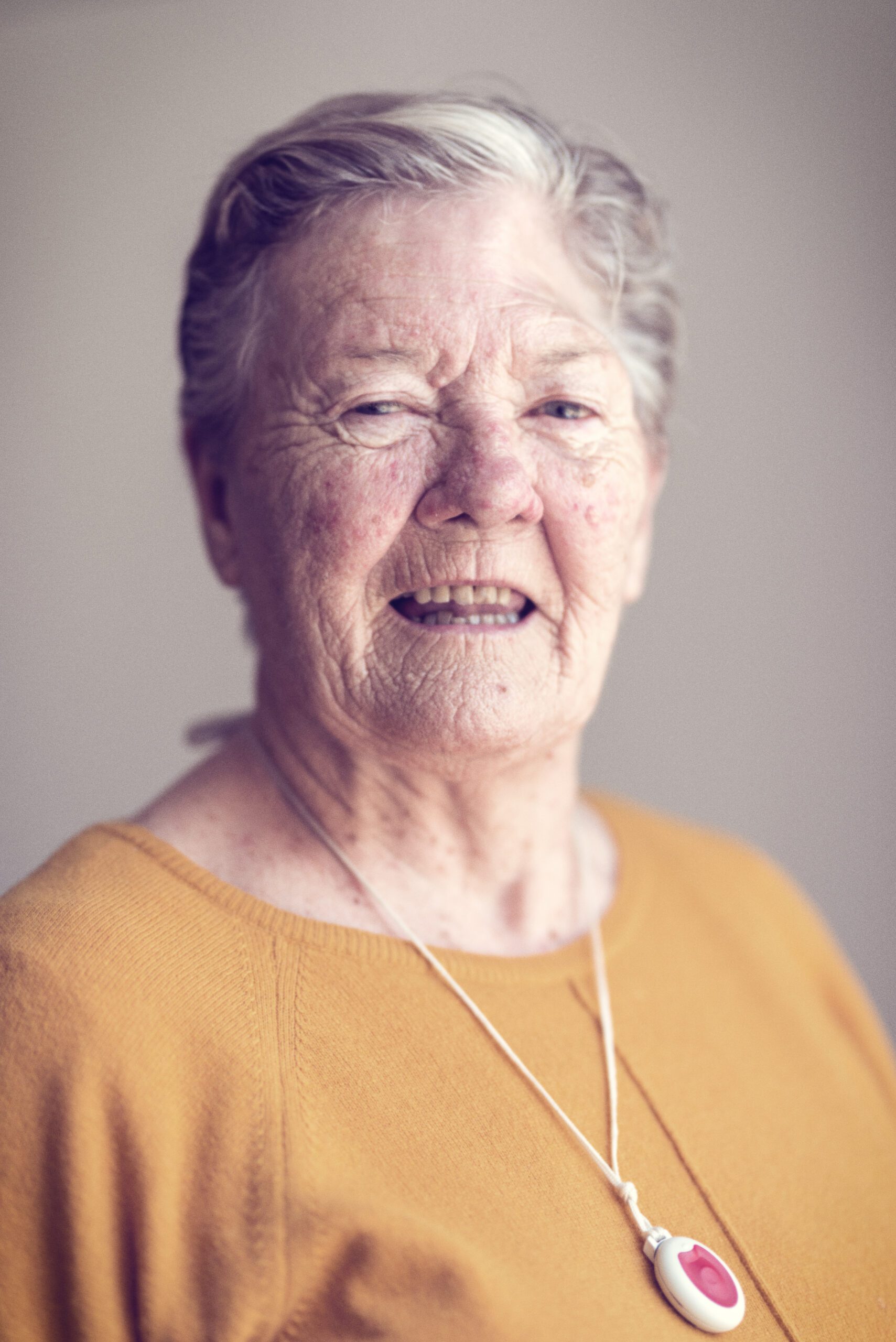
The portrait of my mother opposite was taken shortly before her advancing dementia meant that she had to move into a care home.
I was able to position mum in front of a large north-facing window and use the soft natural light to illuminate her. If the light is too bright consider hanging something like a net curtain to diffuse and soften it. Mum's dementia would have meant her getting agitated if I had begun to set up my studio lights.
Remember, family photography does not have to be a complicated process. Ceiling lights or lamps can allow you to capture beautiful atmospheric portraits.
Dress it up for family photos
Choosing the right clothing can make or break your family portrait photo session. Clothing with a strong pattern can be distracting and can sometimes cause chromatic aberration. Too many bright colours can also be very distracting in a photograph.
As part of your planning process ask family members to opt for solid colours that complement each other. Coordinating the colours of your clothing can help create a cohesive and polished look in the final portrait. For example, if the family portrait is being taken in woodland during the autumn months, it makes sense to have the whole family dressed in autumnal colours.
Of course, if you want your family photo session to show your family's wild and kooky side feel free to go for a mix of bright colours. It's your family session, and in a successful family photo shoot the pictures should reflect your family's personality. The perfect family portrait is the one that you love!
Family portrait photography with kids and small children
When you are aiming to capture the perfect family portrait it's arguable whether small children or teenagers are the most difficult subjects.
If you are dealing with kids and small children it's really important to remember that they have a very short attention span. Young children get bored easily. so remember to have things to hand that will keep them amused.
One of my favourites is a bubble machine. These can be picked up at very reasonable cost and they will keep the kids, big and small, amused for hours.
When taking a family portrait, it's important to consider the perspective from which you're shooting. Instead of standing up and shooting down at your subjects, try getting down to their level to create a more intimate and natural-looking portrait.
This will also help to create a more dynamic composition and bring the focus on the faces of your family members.
Communicate and engage
When you are photographing family, it's important to make sure that everyone is singing from the same song sheet. This means communicating with each member of your family about the portrait session and what you hope to achieve.
Any successful family photographer will tell you that It's important to be flexible and open to suggestions. The best portraits are not about shutter speed or brand of camera, they are a collaboration between the photographer and the family.
We have two ears and only one mouth so listen more than you talk. The perfect family portrait is achieved when everyone is delighted with the results.
Shoot candid family photography
One of the beauties of the digital photo is that we don't have a cost every time we click the shutter.
Unscripted moments, like a child crying after falling over, tell much more of a family's story than a formal studio portrait ever could.
These are moments captured forever, moments that will evoke memories long into the future. Catching family members in unguarded moments, or doing things that they love, gives the photographer a high chance of photo success.
Don't forget the family dog
When we are taking family portraits we should aim to include the whole family. This can mean photos of individuals as well as groups. Always remember that the family dog or cat is an important member of the family.
A family member posing with a new puppy makes for a perfect family portrait. However, I don't advocate buying a puppy just for cute family photos. Dogs are for life, not just for photos.
Use props in your family photo session
I am sure that I am not alone when I say that family session photography in front of a plain white background can be pretty dull.
As you may note, from the images included in this article, props tend to play a role in many of my family photo sessions.
Consider bringing along a favorite toy or blanket to incorporate into the portrait. This can also be a great way to add some personality to the portrait and make it more unique. Remember, the perfect family portrait tells the story of the family.
Be playful in your family photos
Family portraits should be fun and enjoyable for everyone involved. Encourage your family to relax and have fun, there are no rules to say that family portraits have to be formally posed.
Try to capture the candid moments in between the posed shots. Get shots of your kids splashing in puddles, making snow angels, or playing wrestling with dad.
These candid shots can often be the most meaningful and special. Don't be afraid to shoot from different angles, get up high, go down low, tilt the camera and break the "rules."
You might want to try shooting in Black and White when you want to add a timeless quality to the final photos.
Take your time, don't rush a family portrait session
Setting the right length of time for a family portrait photo shoot is a delicate business. A session that includes babies or children needs to be fairly short. Kids get bored after 15 - 20 minutes and few sitters want to be posing for more than an hour.
However, the overall length of the shoot is less important than you, the photographer taking the time to ensure everything is just right. Make sure that background distractions are removed unless they form an important element in the photograph.
If necessary take light meter readings, shoot a grey card to ensure that your white balance is perfect. Frame your shots properly and adjust poses where necessary. If you get as much right as possible in the camera there will be less to work on come editing time.
It's much better to have 10 perfect family portraits than it is to grab 300 mediocre images in a session.
Have a backup plan
When I served in the Royal Navy, we had a saying that "no plan survives the first contact with the enemy." The same can be said for photoshoots. Always have a backup plan in case of bad weather or other unforeseen circumstances.
Consider alternative locations or times for your portrait session and be prepared to adapt as needed. That might mean using flash to overpower harsh sunlight, bad weather might make shooting outside impossible or unpleasant. Having the right equipment to allow you to change plans in moments can be the difference between success and failure.
You need to take the human factor into account during your planning. How will you react if you turn up for a family portrait shoot and one of the children is having a tantrum? The temptation would be to carry on and make the best of it even if the results are not optimal. It's not your fault that the kid is a nightmare, right?
Beware, that sort of thinking will cost you repeat business, or in your own family lose you the willingness of your family to pose for you. It is much better to do what you can at the time and then offer to return at a later stage to complete the shoot.
It's my view that you should always leave your sitters 100% happy with the final photographs. Repeat business is much more likely and word-of-mouth recommendations are invaluable. If you book a family photoshoot package with me this is exactly the level of service you will receive.
Perfect family portrait tips: Conclusion
It might seem that there is a lot to remember but the tips I offer here are not that difficult to put into practice. They are all fairly simple things and they really amount to paying more attention to the little things. Individually, the various tips make a small difference to the quality of your photography work.
It's when you implement all of the photography tips into you family portrait sessions that you will begin to see huge differences in the quality of your work. When you begin to incorporate all of these things into your shoot routine they will help to ensure that you get the perfect family portrait every time, no matter what happens.
https://alanewart.co.uk/the-perfect-family-portrait-10-top-tips/?feed_id=2&_unique_id=63dae8f0b12b4
 Our affordable Adobe Lightroom Workshops are aimed at digital photographers who have struggled to get to grips with Adobe's catalog and editing program.
Make no mistake, the 2023 version of Lightroom is a game-changer. The addition of Artificial Intelligence based masking, the ability to have multiple masks, and the capability of those masks to intersect with each other are truly groundbreaking.
The recent addition of color grading, combined with AI-based masking, really does make Lightroom a viable alternative to Adobe's flagship Photoshop program for most of a photographer's editing needs.
Our one-day Lightroom Workshops will have you editing your images to a very high standard whatever your level of previous knowledge. You will be taken through every aspect of an efficient Lightroom workflow, from creating a catalog and importing images to exporting the finished image.
You can expect to leave the workshop with the ability to do all of the following in an efficient way:
Our affordable Adobe Lightroom Workshops are aimed at digital photographers who have struggled to get to grips with Adobe's catalog and editing program.
Make no mistake, the 2023 version of Lightroom is a game-changer. The addition of Artificial Intelligence based masking, the ability to have multiple masks, and the capability of those masks to intersect with each other are truly groundbreaking.
The recent addition of color grading, combined with AI-based masking, really does make Lightroom a viable alternative to Adobe's flagship Photoshop program for most of a photographer's editing needs.
Our one-day Lightroom Workshops will have you editing your images to a very high standard whatever your level of previous knowledge. You will be taken through every aspect of an efficient Lightroom workflow, from creating a catalog and importing images to exporting the finished image.
You can expect to leave the workshop with the ability to do all of the following in an efficient way:

 Finding interesting documentary photography topics can be a challenge. This article will help photographers to generate ideas and tell powerful stories.





 One of the beauties of the digital photo is that we don't have a cost every time we click the shutter.
Unscripted moments, like a child crying after falling over, tell much more of a family's story than a formal studio portrait ever could.
These are moments captured forever, moments that will evoke memories long into the future. Catching family members in unguarded moments, or doing things that they love, gives the photographer a high chance of photo success.
One of the beauties of the digital photo is that we don't have a cost every time we click the shutter.
Unscripted moments, like a child crying after falling over, tell much more of a family's story than a formal studio portrait ever could.
These are moments captured forever, moments that will evoke memories long into the future. Catching family members in unguarded moments, or doing things that they love, gives the photographer a high chance of photo success.
 When we are taking family portraits we should aim to include the whole family. This can mean photos of individuals as well as groups. Always remember
 When I served in the Royal Navy, we had a saying that "no plan survives the first contact with the enemy." The same can be said for photoshoots. Always have a backup plan in case of bad weather or other unforeseen circumstances.
Consider alternative locations or times for your portrait session and be prepared to adapt as needed. That might mean using flash to overpower harsh sunlight, bad weather might make shooting outside impossible or unpleasant. Having the right equipment to allow you to change plans in moments can be the difference between success and failure.
You need to take the human factor into account during your planning. How will you react if you turn up for a family portrait shoot and one of the children is having a tantrum? The temptation would be to carry on and make the best of it even if the results are not optimal. It's not your fault that the kid is a nightmare, right?
Beware, that sort of thinking will cost you repeat business, or in your own family lose you the willingness of your family to pose for you. It is much better to do what you can at the time and then offer to return at a later stage to complete the shoot.
It's my view that you should always leave your sitters 100% happy with the final photographs. Repeat business is much more likely and word-of-mouth recommendations are invaluable. If you
When I served in the Royal Navy, we had a saying that "no plan survives the first contact with the enemy." The same can be said for photoshoots. Always have a backup plan in case of bad weather or other unforeseen circumstances.
Consider alternative locations or times for your portrait session and be prepared to adapt as needed. That might mean using flash to overpower harsh sunlight, bad weather might make shooting outside impossible or unpleasant. Having the right equipment to allow you to change plans in moments can be the difference between success and failure.
You need to take the human factor into account during your planning. How will you react if you turn up for a family portrait shoot and one of the children is having a tantrum? The temptation would be to carry on and make the best of it even if the results are not optimal. It's not your fault that the kid is a nightmare, right?
Beware, that sort of thinking will cost you repeat business, or in your own family lose you the willingness of your family to pose for you. It is much better to do what you can at the time and then offer to return at a later stage to complete the shoot.
It's my view that you should always leave your sitters 100% happy with the final photographs. Repeat business is much more likely and word-of-mouth recommendations are invaluable. If you